Fort Lauderdale Mold Remediation: What Condo and HOA Owners Need to Know
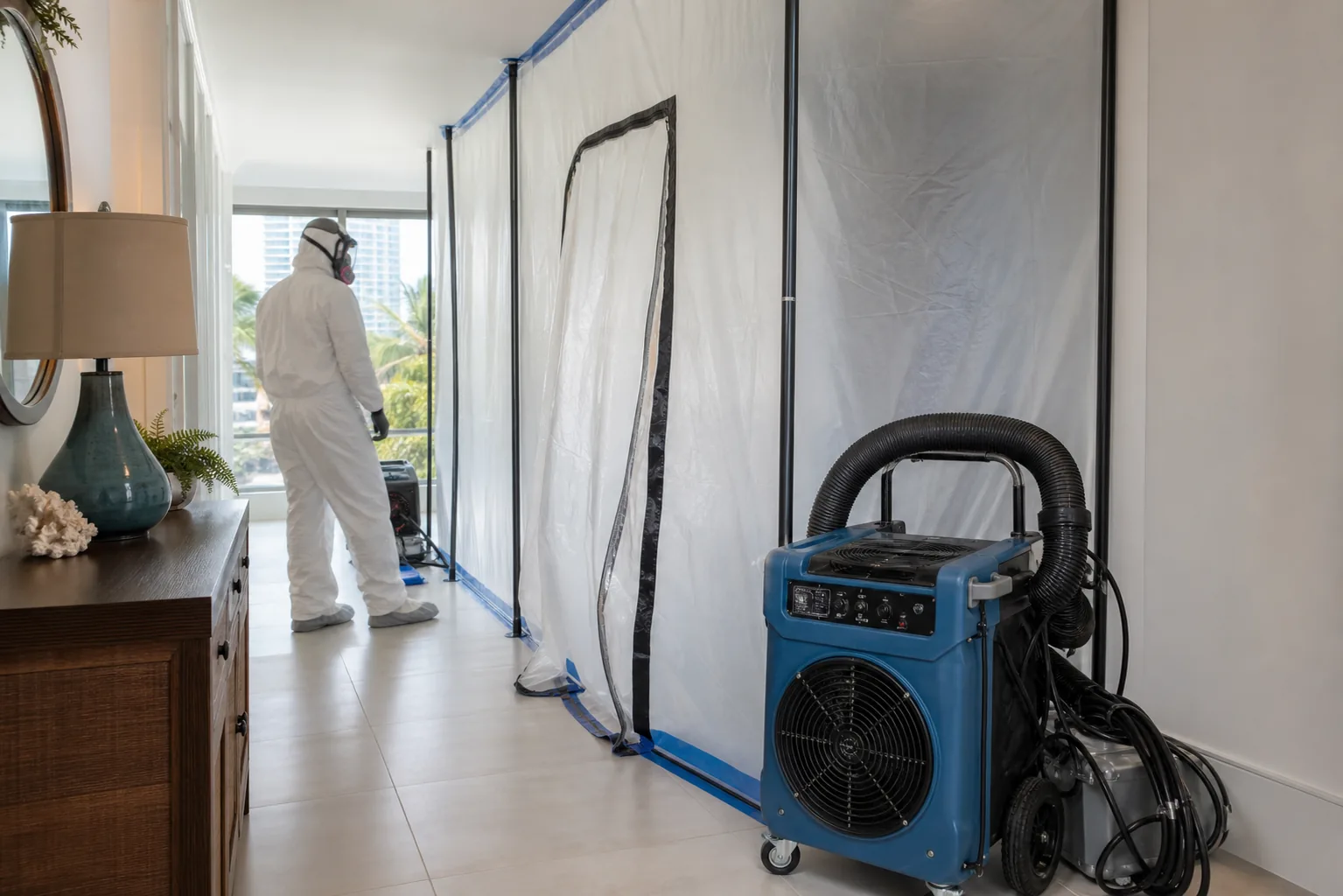
Table of Contents
- Introduction.
- Local Context.
- What Fort Lauderdale Mold Remediation Contractors Look For.
- Pricing and Scope.
- How to Verify a Mold Remediation Contractor in Florida.
- Next Steps.
Introduction
Broward County's coastal flood events can push visible mold growth through a condo building within 48 hours of water intrusion. That leaves unit owners and HOAs fighting over who pays. That dispute starts before any contractor arrives and hardens once remediation removes the physical evidence.
Fort Lauderdale property owners face this under the worst conditions: shared buildings, competing insurance policies, and a dense local contractor market that rewards speed over credentials. Acting fast matters. Acting without a paper trail creates a separate and lasting problem.
Treat the first 48 hours as a containment and documentation window. Photograph the water source, affected materials, and unit boundaries before any contractor touches anything. That record determines who pays, how much, and for what. Everything else follows from it.
Local Context
Broward County's mold pressure runs year-round, not just during hurricane season. Pompano Beach, Deerfield Beach, and Hollywood share Fort Lauderdale's coastal humidity and flood exposure. Storm surge, roof penetrations, and slab leaks all generate remediation calls between named storms.
Coastal condo and HOA properties create complications that single-family jobs rarely involve. After water enters a building, liability typically splits three ways: the unit owner's individual policy, the HOA master policy, and the property manager's decisions in the first hours. Those three parties often disagree about scope, timing, and responsibility. The outcome depends heavily on which party documented the intrusion source first and most completely.
The Fort Lauderdale restoration market is dense and varied. Independent firms, national franchise operations, water-damage contractors who treat mold as secondary scope, and mold-only providers all compete for the same post-flood calls across Broward. That volume creates a selection problem. A contractor appearing at the top of a search results page tells you nothing about whether that company holds a current Florida DBPR license as a mold assessor or remediator.
Knowing whether a contractor carries adequate insurance or has completed contained remediation work inside occupied multifamily buildings requires direct questions. The buyer who asks those questions before signing controls the outcome. The buyer who calls first and signs fastest hands that control away.
What Fort Lauderdale Mold Remediation Contractors Look For
A contractor's first priority on site is not price. It is the moisture source. Remediation that does not stop the source fails, regardless of how thoroughly materials are removed.
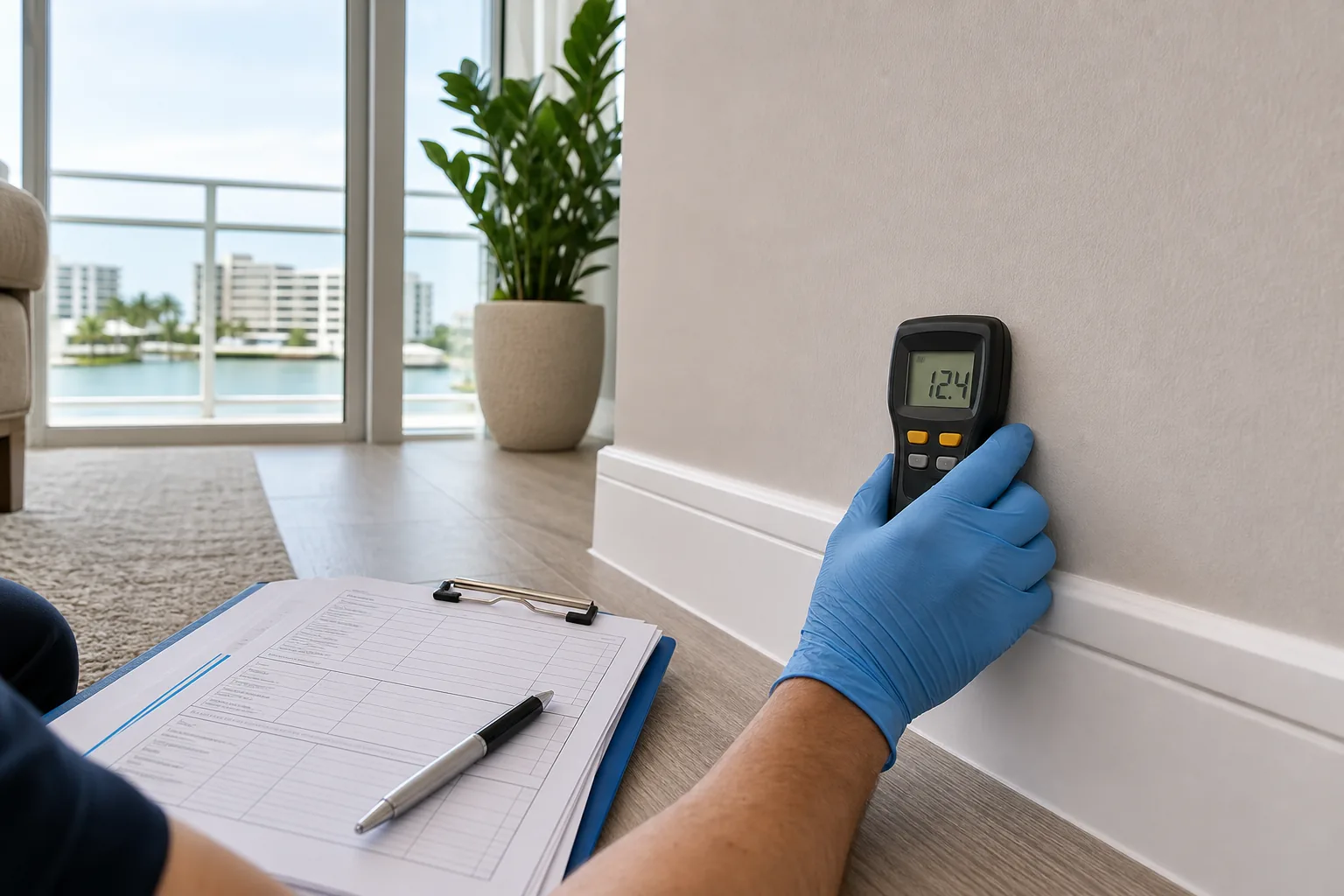
After confirming the source is controlled, contractors check for hidden moisture behind drywall, under flooring, and inside HVAC cavities. Coastal construction common throughout Broward County often traps moisture in wall assemblies that look dry on the surface. A thermal imaging scan or probe reading matters more than a visual pass alone.
Containment feasibility comes next. In multifamily buildings, shared air-handling systems can move spores from an affected unit into adjacent spaces through return ducts and corridor gaps. A condo hallway with active HVAC requires sealed negative-pressure containment and restricted access points. A detached garage allows simpler barrier methods with fewer occupied-space risks. The specific containment plan depends on the building type, not a generic template.
Material type determines whether removal or cleaning applies. Porous materials—drywall, insulation, carpet—typically require removal. Hard, non-porous surfaces may allow cleaning under the right conditions. Neither answer is accurate without an on-site assessment. A contractor quoting a job over the phone is estimating, not scoping.
The standard work sequence runs in a fixed order: stop the moisture source, establish containment, remove or treat affected materials, dry the structure, and produce post-work clearance documentation. Ask any contractor to walk through that sequence before you sign a work authorization. A contractor who skips source control and moves directly to removal is skipping the step that determines whether the remediation holds.
Florida regulations treat assessment and remediation as separate licensed functions. The firm performing the assessment should not perform the remediation on the same job. Ask which role the contractor is filling before any agreement is signed.
Pricing and Scope
Mold remediation jobs in the Fort Lauderdale area vary widely depending on scope, access, and affected materials. Small isolated surface jobs run toward the lower end of the market. Jobs involving large containment zones, structural demolition, extended drying time, or multi-unit condo buildings push costs substantially higher. Actual pricing depends on conditions only an on-site assessment can confirm. National data from HomeAdvisor and Angi puts professional mold remediation in the $1,223–$3,754 range nationally, though Broward County jobs involving condo containment and multi-unit access typically run toward the higher end of that range. Flat-rate estimates without a site visit are not reliable.
Several variables drive cost beyond square footage. Access difficulty is one. A ground-floor bathroom is a different job than a mid-rise condo unit accessible only by elevator. A sealed HVAC chase may require partial demolition to reach. Material removal adds both labor and disposal cost that surface-cleaning jobs do not carry. Containment complexity increases when affected areas are adjacent to occupied units—a routine scenario in Broward County condo buildings after storm events.
Post-remediation clearance testing is sometimes required by an insurer or HOA before a unit can be reoccupied. It is a separate cost line that not every initial quote includes. Ask about it directly.
Request a written scope of work before authorizing any job. That document should specify the affected materials, the containment method, the disposal plan, and whether post-work clearance testing is included or billed separately. Verbal scopes leave room for cost disputes after demolition is underway.
Insurance coverage for mold remediation depends on how the water intrusion is classified. Sudden pipe failures and slow humidity buildup are treated differently by most policies. Establish the intrusion source, timing, and affected systems in writing before work begins. In HOA-involved properties, that record also determines which policy applies to which portion of the damage.
How to Verify a Mold Remediation Contractor in Florida
Florida requires separate state licenses for mold assessors and mold remediators under Chapter 468 of the Florida Statutes, administered by the Department of Business and Professional Regulation. Before signing any work authorization, ask the contractor for their license number. Verify it yourself at myfloridalicense.com before work begins.
The DBPR database confirms license type, current active status, and any disciplinary history. A remediator license does not authorize assessment work. An assessor license does not authorize remediation. Confirming which license a contractor holds tells you whether they are legally permitted to perform the specific role they are proposing.
Beyond state licensing, ask whether the company or its technicians hold credentials from IICRC, ACAC, or NORMI. These are industry certification bodies, not state regulators. Industry credentials do not substitute for a Florida state license, but holding both gives you more to evaluate. A contractor who cannot name a state license number or an industry credential warrants additional scrutiny before any agreement is signed.
Request proof of liability insurance and confirm specifically that the policy covers mold remediation work. General contractor policies sometimes exclude it. Check that the policy is current—not just that a certificate was issued at some prior date.
In the Fort Lauderdale and broader Broward County market, phone availability is not a qualification signal. Franchise branding is not a substitute for verified individual licenses. The crew doing the physical work must hold the applicable credentials, not just the parent brand or the sales office.
Request references from completed jobs involving a property type similar to yours—condo, single-family, or multifamily. A contractor with regular post-flood coastal work in Broward will understand containment complexity and insurer documentation requirements that general remodelers may not recognize.
Next Steps
Pull both your unit owner's policy and your HOA master policy now. The remediation cost conversation will require both documents, and waiting until a contractor is on-site costs you negotiating position. Request a written scope of work from every contractor you contact—containment method, materials to be removed, drying plan, and whether post-work clearance testing is included. Get quotes from more than one provider before signing anything. Pricing differences between contractors on identical jobs in this market can be substantial.
Additional resources: Fort Lauderdale mold remediation companies, mold remediation cost guide, how to choose a mold remediation company, EPA mold cleanup guidance, Florida DBPR mold-related services licensing.